Home | About the Director | FAQ | Testimonials | | How to Find Us

Home | About the Director | FAQ | Testimonials | | How to Find Us |
|
About the DirectorQuestions?Conditions We TreatSpecialty ProceduresOur LocationTestimonials |
|
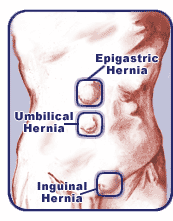
What Are Hernias?A hernia (pronounced: her-nee-ah) is an opening or weakness in the wall of a muscle, tissue, or membrane that normally holds an organ in place. If the opening or weakness is large enough, a portion of the organ may be able to poke through the hole. A hernia may be referred to as a rupture. Imagine an inner tube poking through a hole in an old tire - that's what a hernia is like, except the intestines are the inner tube and the tissues of the abdominal wall make up the old tire. Hernias happen in certain parts of the body more frequently. Some places in the body that tend to develop hernias include the abdomen, groin and upper thigh area, belly button area, and any place where you may have had an incision from surgery. How Do People Get Hernias?It might take a long time for a hernia to develop or it might develop suddenly. Hernias are caused by a combination of muscle weakness and strain, although the cause of the weakness and the type of strain may vary. Most teens who are diagnosed with a hernia actually have had a weakness of the muscles or other abdominal tissues from birth (called a congenital defect). In these cases, the teen's straining does not cause the hernia; it only makes the hernia more apparent (and painful!). These types of strain may induce hernia:
These types of strain on their own probably won't give you a hernia - it's just when they team up with a weak muscle that a hernia is more likely to result. Despite the availability of open techniques for the treatment of hernias, a study published in the New England Journal of Medicine has shown that laparoscopic hernia repair was superior to the open repair in terms of less postoperative pain, and quicker return to home and normal activity. Recurrence rate was lower. Also, see our section on the Prolene Hernia System
|
|
||
| Site Copyright © 2026 by the Heartburn
Center of San Diego |
|||||
|
|
|
|||